By Alphonso Morrow Jr. | 22 Ways to Heal
Basketball has been part of my life for as long as I can remember. I've grown up playing it, putting countless hours into training, practicing, and trying to become the best player I can be. At this point, it's hard for me to imagine what my life would look like without it.
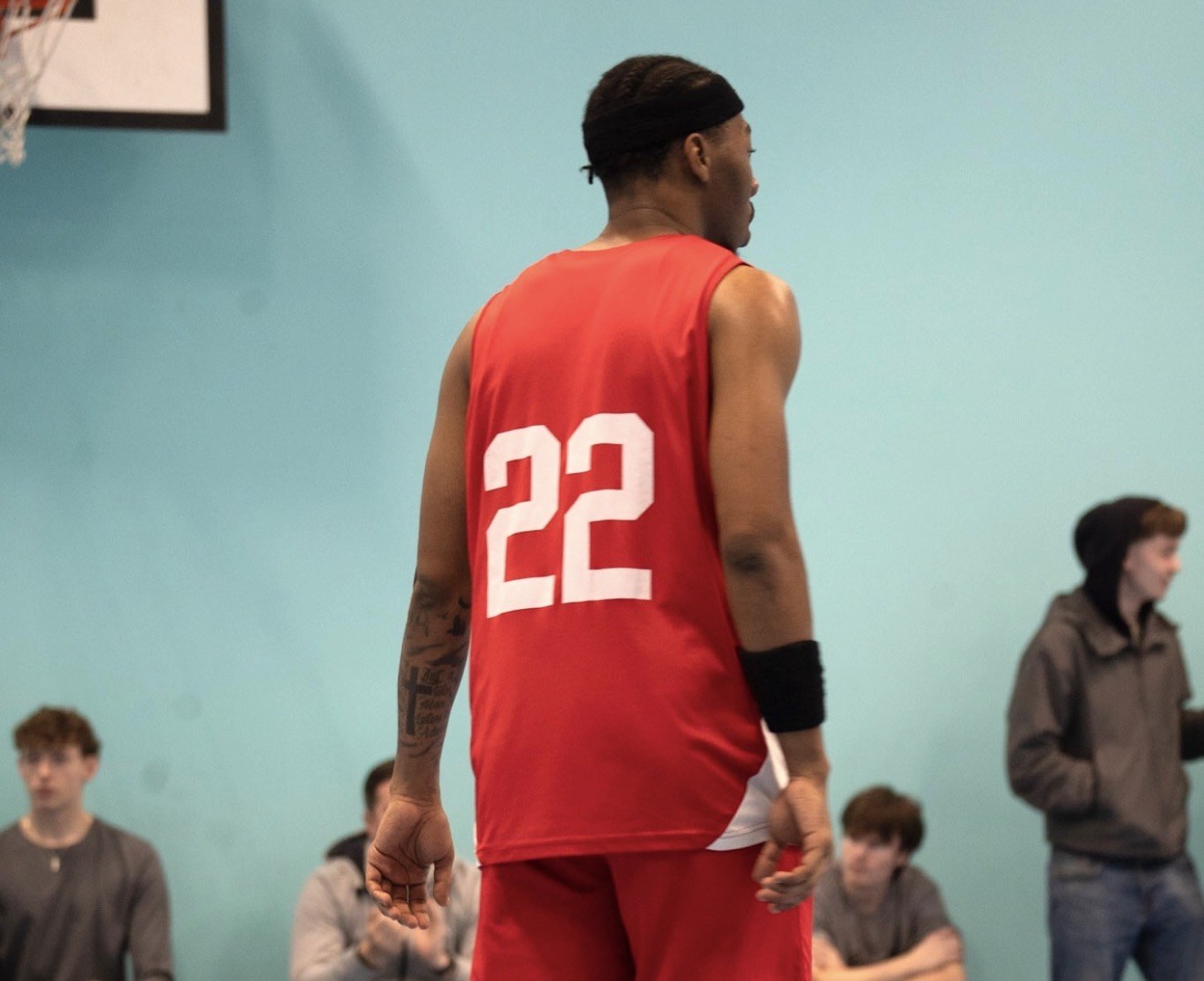
Even the number on my jersey has a meaning that goes beyond basketball. I've worn 22 since I was a kid, and the reason behind it has always been personal. Both my dad and I have the same favourite number, 2. So 22 became a way of representing both of us, one 2 for him and one for me.
It's something that's been part of my identity for years, long before I ever created 22 Ways to Heal.
But something I've started to realize as I've gotten older is how much basketball affects the way I feel about myself, even when I'm nowhere near a court.
When you've dedicated so much of your life to something, it's hard not to let your success or failure in that area determine how you feel about yourself as a person.
And that's something I'm still learning how to separate.
When a Bad Game Becomes More Than a Bad Game
One of the hardest feelings in basketball is knowing how much work you've put in and still not performing the way you know you're capable of.
You spend hours in the gym. You train, practice, sacrifice your time, and prepare yourself for opportunities to show what you can do. So when game day comes and things don't go your way, it's disappointing.
But for me, that disappointment doesn't always stay on the court.
Sometimes a bad game can affect my entire mood. I'll find myself thinking about missed opportunities, things I could've done differently, or why I wasn't able to perform at the level I know I can.
And the frustrating part is that I know the work I've been putting in.
That's when the self-doubt starts creeping in.
Am I doing enough? Am I actually as good as I think I am? Why isn't the work showing?
Sometimes those thoughts stay in my head much longer than they should.
It's not always about losing a game or having a bad performance. Sometimes it's about what that performance makes you start believing about yourself.
The Confidence That Follows You Off the Court
Something I've noticed about myself is that my confidence in basketball can sometimes influence my confidence in other areas of life.
When I'm playing well, feeling comfortable on the court, and seeing my hard work pay off, that confidence can carry into everything else I'm doing.
But when I'm going through a difficult stretch, whether that's underperforming, not getting the playing time I want, or struggling to find my rhythm, it can have the opposite effect.
I start questioning myself more.
And sometimes that self-doubt has nothing to do with basketball anymore.
It's almost like the way I see myself as an athlete starts affecting the way I see myself as a person.
I think that's one of the challenges of being involved in a sport for most of your life. When something becomes such a big part of your identity, separating who you are from what you do isn't always easy.
Especially when you're still actively competing and trying to reach higher levels.
Finding Balance Between Sports and Everything Else
Another part of this that doesn't always get talked about is how difficult it can be to balance sports with the rest of your responsibilities.
As a student-athlete, I'm not only thinking about practices, games, training, and improving my performance. I also have university work, deadlines, and personal projects that I want to build outside of basketball.
And sometimes, trying to give everything the attention it deserves becomes overwhelming.
There are times when I put more energy into my schoolwork and start feeling like I'm not doing enough in my sport.
Then there are times when basketball takes up so much of my focus that I feel like I'm falling behind in other areas.
It can become a cycle where you're constantly feeling like you should be doing more, even when you're already giving a lot of yourself.
And when things aren't going well in either area, the pressure starts adding up.
I think that's something a lot of student-athletes can relate to. You're expected to perform in your sport while also keeping up with responsibilities that don't stop just because you've had a difficult game or a long week.
Finding that balance isn't something I've completely figured out yet.
It's something I'm still working through.
Learning That My Performance Doesn't Define Me
Even now, as I continue playing basketball at a higher level, I still have moments where I let my performance affect how I feel outside of the game.
I wish I could say I've completely learned how to separate the two, but I haven't.
What I am learning, though, is to become more aware of when it's happening.
Having a bad game doesn't erase the work I've put in. A difficult season doesn't mean I'm not good enough. And struggling with confidence doesn't mean I've suddenly lost my ability.
It's easy to understand those things when everything is going well. The challenge is reminding yourself of them when things aren't.
I still care deeply about basketball. I still want to improve, compete, and achieve the goals I've set for myself.
But I'm also starting to understand that I have other parts of my life that deserve the same attention and energy.
My education matters. My personal growth matters. My relationships, interests, and the things I'm building outside of basketball matter too.
I don't want to lose sight of those things just because I'm having a difficult stretch in my sport.
More Than the Game
One of the reasons I wanted to create 22 Ways to Heal was to have a space where conversations like this could happen.
Not just about basketball, but about the pressures we put on ourselves, the expectations we carry, and the things we sometimes struggle with silently.
The number 22 has always represented something personal to me. It's a connection to my dad, my childhood, and the sport I've spent most of my life playing. But through 22 Ways to Heal, I also want that number to represent something bigger than basketball.
I want it to represent growth, self-awareness, and learning to take care of yourself mentally while navigating the pressures of life.
I know I'm not the only person who has allowed something they're passionate about to affect how they feel about themselves.
Maybe for you it's not basketball. Maybe it's school, your career, your appearance, or something else you've invested a lot of yourself into.
Whatever it is, I think it's important to remember that struggling in one part of your life doesn't mean you're failing as a person.
I'm still learning that myself.
Basketball will always be part of who I am, but I'm working on making sure it doesn't become the only thing that determines how I see myself.
Because at the end of the day, I'm more than just an athlete. I'm still someone when the game is over and the jersey is off. And you're more than what you do in your field too.
22 Ways to Heal is about growth, awareness, and understanding that healing isn't always a straight line. Sometimes it starts with recognizing the things you've been carrying without even realizing it.
Explore Wellness Resources →